
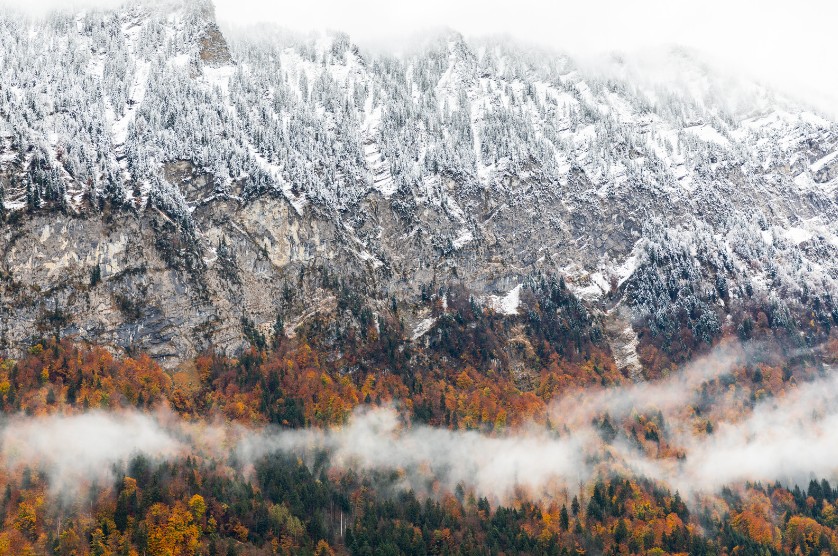
The back-to-school rush is over, everyone has settled back into their routines, and the autumn grind has set in: work, priorities, the never-ending to-do list… The days are getting shorter, the light is fading, and the only glimmer of hope seems to be the prospect of the next vacation.
But this time of year can also be a wonderful opportunity to take care of yourself. In Ayurveda, each season is an invitation to adjust our habits and align with the rhythm of nature. With a few simple adjustments, autumn and early winter can become seasons we move through gently, and even enjoy.
A quick note before we begin: in the Charaka Samhita, one of the foundational texts of Ayurveda, autumn looks nothing like ours, because the Indian calendar doesn’t match our seasons. Here, I’m talking about what we observe in France and Switzerland. Everyone should adapt this to where they live.
How does Ayurveda understand Autumn?
Throughout the summer, Vata quietly accumulated (Sanchaya) with the heat and dryness. Now that autumn is arriving, it moves into the aggravation phase (Prakopa).
The qualities of autumn are those of Vata: dry (ruksha), cold (sheeta), light (laghu), mobile (chala), rough (khara) and subtle (sukshma).
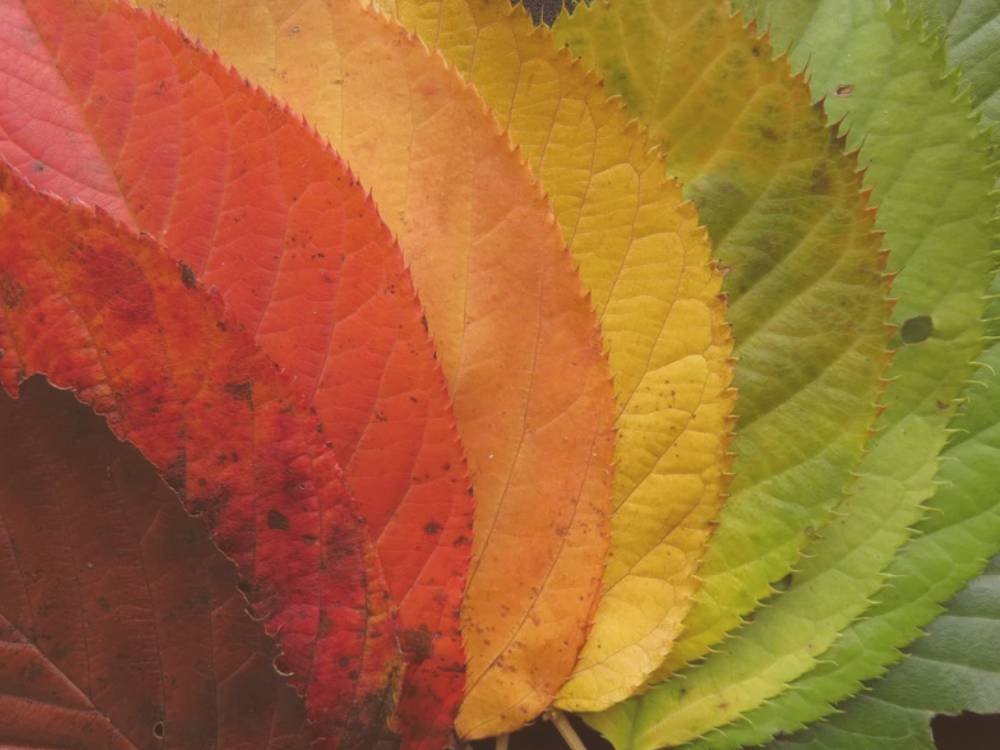
And you can see it outside: the days are getting colder, the breeze picks up, the air is dry, and the wind brings down the last leaves from the trees.
We’ve moved from a Pitta season, summer, to a Vata season, with a transition period between the two, Ritusandhi (I talk about it in this article).
The advice below also applies to early winter, when Vata remains aggravated.
The Principle for Finding Balance
To understand what follows, we need to remember a basic principle of Ayurveda: like increases like, and opposites balance. To soothe Vata, we therefore choose qualities opposite to its own:
- dry → unctuous, oily (snigdha)
- cold → warm (ushna)
- light → heavy (guru)
- mobile → stable (sthira)
- rough → smooth (slakshna)
- subtle → dense (sthula)
Dinacharya : the Art of the Daily Routine
If there’s only one thing to remember for caring for yourself during Vata season, it’s regularity. Vata is mobile and irregular, so the best way to balance it is to adopt a routine structured by regularity.
- Regularity: same times for meals, waking up, going to bed, etc.
- Drinking a glass of warm water upon waking will instantly calm Vata and stimulate bowel movements
- More slowness: in the pace of your day but also in your activities. When you exercise, when you walk, when you work.
- Gentle movement: favor soft, regular physical activity, such as walking or stretching, rather than sudden, fast movements.
- Staying warm: dress warmly when you go out, preferably in natural fabrics.
- Eating well: the body needs heaviness in this season. With the cold, the digestive fire (agni) gets stronger, so it’s the time to eat heartier meals.
- Abhyanga: daily oil self-massage provides the oily quality (snigdha) that Vata needs. Massage slowly and gently. Sesame oil is especially recommended, as it is nourishing and warming.
Diet in Autumn: Simple adjustments
Here, we’re looking at a diet suited to the Vata dosha, and therefore to people of this constitution or those with a Vata imbalance. If you know your dosha, keep following the diet that matches it (Pitta or Kapha, for example). However, if you have a dual constitution that includes Vata (Vata-Pitta, Pitta-Vata or Vata-Kapha), it’s the right time to adopt a Vata diet for this season:
- Flavors to favor: sweet (madhura), sour (amla), salty (lavana).
- Qualities: warm, cooked, oily, nourishing, heavy (don’t hesitate to add ghee or cold-pressed organic oils to your dishes).
- Examples of seasonal foods: squash, apples and pears (cooked), cooked grains, soups, kichari, porridge, mashed vegetables, etc.
- Cook with warming spices for Vata to facilitate food digestion: cardamom, fennel, nutmeg, cinnamon, cumin, ginger.
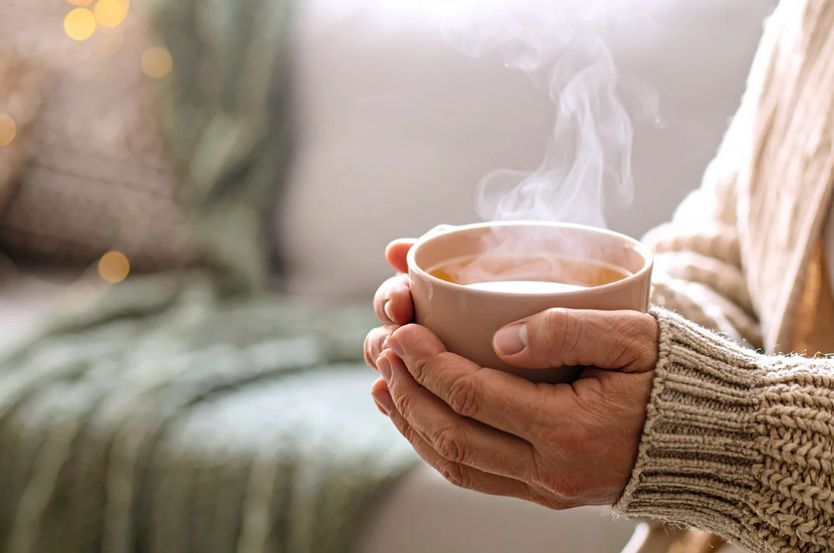
- Drink herbal tea infusing the above spices
How to Adapt your Yoga Practice to this Season?
- Slow, gentle, grounding practices: favor gentle hatha yoga, yin yoga, or practices with slow movements. Also consider meditation and yoga nidra for deep recovery.
- Asanas:
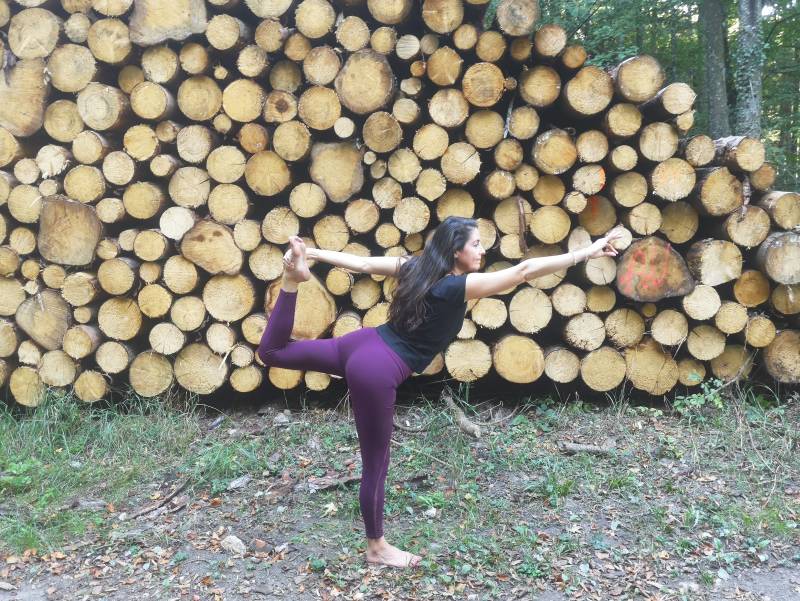
– All postures that promote grounding: seated postures, floor postures, and balancing poses the tree (Vrikshasana).
– Forward bends such as the seated forward fold (Paschimottanasana). They act on the large intestine, which is the seat of Vata.
– Gentle backbends such as the cobra (Bhujangasana).
– Twists and spinal movements, as they help release Vata.
– Hip-opening postures, such as the pigeon (Ardha Kapotasana). - Pranayama: Nadi shodhana (alternate nostril breathing) is the pranayama par excellence for calming Vata, thanks to its balancing effect.
What to Avoid in Autumn
If you’re experiencing an imbalance, here is what’s best avoided this season: everything that increases Vata, and therefore the dry, cold, light and mobile qualities.
- Food that is cold, raw, too light or dry (the perfect example: a breakfast of cold yogurt, uncooked cereal and fruit)
- Fasting, detoxes and anything that puts the body under strain, such as overly intense sports and exercise
- Exposure to cold and wind without warm clothes
- Excess travel
- Going to bed late, sleeping too little, overexposure to screens, especially before going to sleep
- Stimulants (coffee, cigarettes, etc) and overstimulation in general
Do you notice any signs of Vata Imbalance within you?
- Dryness (skin, intestines)
- Constipation
- Insomnia
- Anxiety
- Restlessness, scattered mind
- Cracking joints
- Muscle stiffness
Putting in Practice
This advice extends into early winter (until around mid-January). But once again, the cycle of the doshas depends on where you live.
If there’s only one thing to remember, it would be to adopt a regular routine (dinacharya). It’s truly the starting point.
Know that Vata is the dosha that becomes imbalanced most easily, and even more so in this season. Most of us have some Vata imbalance. If you want to see where you stand, adjust your diet and routine, and work on your imbalances, I offer in-person Ayurveda consultations, Abhyanga massages and other therapeutic body treatments.
My services are recognized by ASCA and RME in Switzerland.