

Summer is here, and with it, the holidays are fast approaching. For many people, this season means going out and doing the activities they haven’t had time for the rest of the year. For others, it will finally be time for dolce far niente – that art of doing nothing, which the peoples of the South have always cultivated with wisdom. And what if this summer languor weren’t laziness, but instinct? After all, the body knows that in periods of intense heat, it needs to slow down.
In summer, the sun reaches its maximum power. In Ayurveda, this corresponds to Pitta season, and more precisely to the period when this dosha enters its aggravation cycle.
Ayurvedic Reading of Summer
Ayurvedic medicine observes natural cycles, both within us and in nature: there is always a link between the two. As a holistic system, Ayurveda starts from the principle that we are not disconnected from our environment. When the heat increases around us, it also has repercussions in our physiology.
The doshas – intelligent principles that govern how our body functions – follow cycles, whether through the seasons, over the course of the day, or even in our digestion. Summer corresponds to the aggravation cycle of the Pitta dosha (elements Fire + Water).
The qualities (gunas) specific to Pitta – hot, penetrating, sharp, light, oily, liquid – built up during the first part of the year (Kapha period), when Kapha liquefied with the gradual rise in heat. The arrival of the great summer heat then brings Pitta to its peak. Note that the excess of summer heat and dryness gradually prepares the arrival of Vata in autumn.

In Ayurveda, a fundamental principle applies: like increases like. When these qualities increase in the environment, they naturally tend to increase in our body as well.
This aggravation of Pitta can show up in different ways:
On the mental and emotional level:
-
Irritability
-
Impatience
-
Anger
-
Mental fatigue or overwork
On the physical level:
-
Inflammation
-
Redness
-
Stomach acidity
-
Diarrhea
People with a Pitta prakriti will be particularly prone to these imbalances at this time of year.
To keep Pitta in balance, it is advisable to cultivate its opposite qualities. If Pitta is hot, sharp and penetrating, what soothes it will naturally be coolness and slowness – two true mantras for summer. It is precisely around these two guiding threads that we will build our summer routine.

Adapting Your Daily Routine in Summer
Daily habits play an important role in maintaining Pitta balance in summer. Here are a few tips:
-
Slow down slightly and avoid overactivity
-
Respect rest periods more
-
Favor the cool moments of the day for being active, and rest during the hottest hours
-
Avoid intense exercise at midday
-
Spend time in nature, and if possible by the water or in the shade
-
Bathe, swim or enjoy water sports and aquatic activities
-
Give yourself a self-massage (Abhyanga) two or three times a week with a cooling oil (coconut, olive, sunflower)
-
Avoid late dinners, so common during these longer days
-
Go to bed early, even if the urge to socialize is there – Pitta is in its aggravation phase between 10 pm and 2 am
-
Avoid screens in the evening — Pitta governs vision, and overexposure to screens throws it further off balance
-
Maintain a serene, non-competitive, non-confrontational state of mind, and cultivate letting go
And most important of all: apply these recommendations gently and cultivate a state of mind of letting go. Pitta is a perfectionist and loves challenges, but these qualities pushed to the extreme can aggravate this dosha. Summer is not a season for pushing harder, but rather for slowing down and relaxing.
How to eat in Summer According to Ayurveda
One of the fundamental concepts in Ayurveda is Agni, the digestive fire, directly controlled by Pitta. One might think this fire increases with the summer heat, but it’s the opposite. The body continually seeks to release excess heat in order to maintain its thermal balance. Part of the digestive energy is mobilized to help the body adapt to the strong summer heat. Agni therefore naturally tends to decrease during this season. Eating in harmony with this weakened Agni is therefore essential, otherwise you risk promoting the creation of Ama (toxins).
Vata and Kapha types need to be more careful, because their Agni is naturally weaker than that of Pitta people. A simple rule is to refrain from consuming cold foods, especially during meals: cold drinks, ice cubes, ice cream, dishes straight from the fridge, too many raw fruits and vegetables.
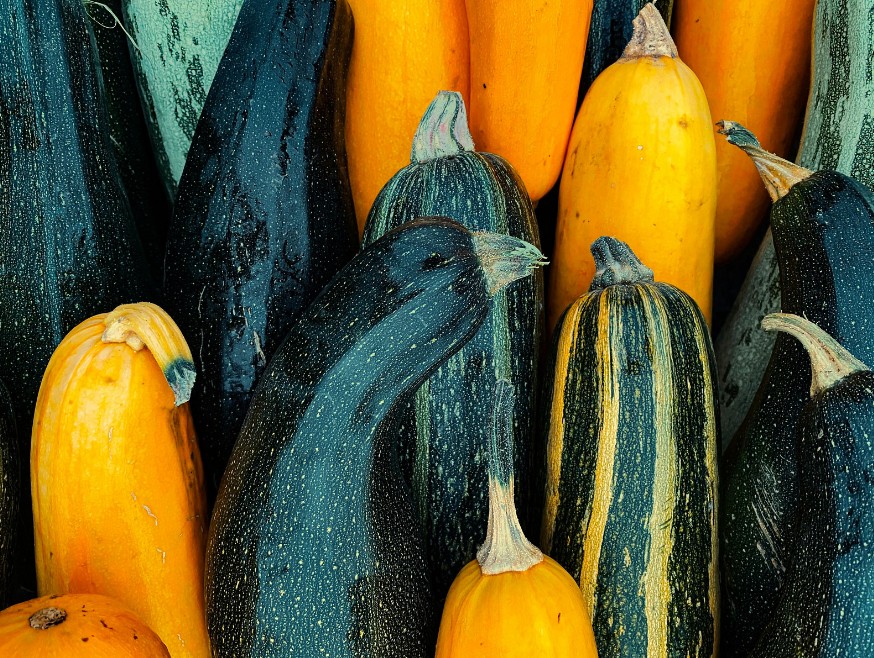
So which diet should you adopt? If you know your prakriti, continue to follow the dietary recommendations indicated (Vata, Pitta or Kapha diet). If you have a dual constitution that includes Pitta (Pitta Kapha or Pitta Vata), summer is the right time to shift to a Pitta diet (or even a lighter one). If you don’t know your prakriti, adopt a Pitta diet for the season, while staying attentive to your digestion.
The tastes that soothe Pitta: sweet, bitter and astringent.
Conversely, the sour, salty and pungent tastes tend to increase Pitta and will therefore be consumed in greater moderation during summer.
Best for Pitta:
-
Ripe, sweet seasonal fruits to enjoy between meals: melons, watermelons, fresh figs
-
Refreshing seasonal vegetables: cucumbers, zucchini, broccoli, green beans, green salads, artichokes
-
Mild grains: basmati rice, oats, couscous, wheat
-
Cooling spices: fennel, coriander, mint, cardamom, turmeric
-
Lightly cooked or sautéed vegetables rather than raw ones (even in summer, cooking supports a weakened Agni)
To avoid for Pitta:
-
Sour, pungent or salty foods: tomatoes, lemon, grapefruit, garlic, raw onion, chili peppers, salty cheeses
-
Alcohol, coffee, fermented foods, spicy or oily dishes, too much raw food
-
Fried foods, excessive barbecues, heavy dishes, white sugar
-
Reduce meat and heavy dairy products that are difficult to digest
-
Iced drinks (they extinguish Agni)
-
Meals eaten too quickly
Special mentions:
-
Vata prakriti: avoid diets that are too light, cold and dry (excess of salads, raw fruits, fruit juice, cold drinks, ice cream, etc.) which increase internal dryness, which would then aggravate Vata in autumn. Favor cooked foods, fats such as olive oil, and sweet, sour and salty tastes
-
Kapha prakriti: eat light, avoid dairy products and heavy grains such as wheat, favor bitter, pungent and astringent tastes as well as cooked vegetables.
Ayurvedic Summer Drinks
-
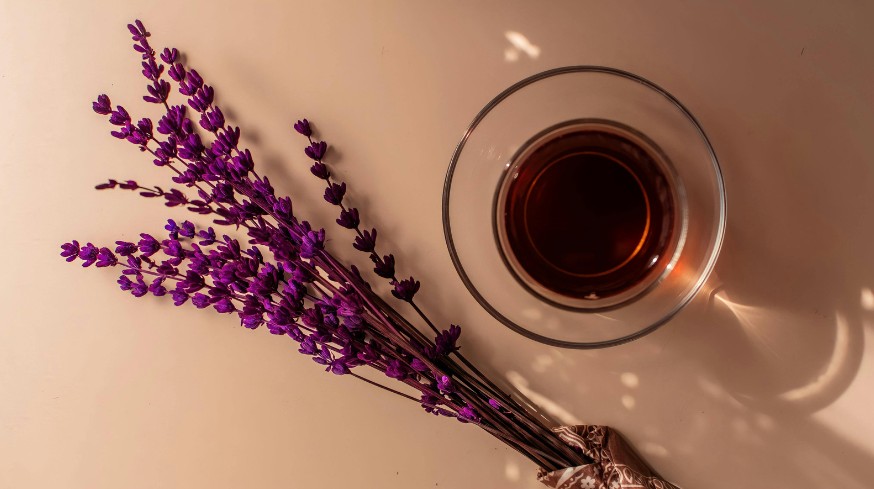
When we think of refreshing drinks, we instinctively think of ice cubes and ice-cold water. But with an Agni that is already weakened in summer, cold or even iced drinks risk extinguishing this digestive fire and compromising digestion even further. This recommendation holds all year round. Also avoid drinking too much during meals so as not to extinguish Agni.
Ice cubes are therefore to be avoided, and very cold drinks reserved only for emergencies: heatstroke, sunburn, intense exertion or a sudden surge of Pitta.
Moreover, hot drinks promote thermoregulation. This may seem counterintuitive, but by stimulating perspiration, they help the body release heat and cool down naturally. You have surely noticed that drinking hot tea is part of the customs of many hot countries (Asia, the Maghreb, the Middle East, etc.).
Water remains the best drink for quenching thirst and cooling down. That said, here are a few variations that will be particularly enjoyable:
-
Infusion of rose, hibiscus, lavender or mint
-
Infused waters with mint or cucumber: at room temperature, or slightly cool for Pitta
-
CCF infusion (cumin, coriander, fennel): steep the seeds in hot water, let it cool until lukewarm and enjoy. Particularly suited to Pitta, it helps rekindle Agni
-
Light lassi or buttermilk (traditional fermented milk): soothing and cooling for Pitta
-
Adapting Your Yoga and Meditation Practice in Summer
The golden rule for Pitta is letting go. In summer, we will therefore favor a calm, cooling yoga, practiced at a moderate pace with flowing movements – always in the shade and sheltered from the heat. We will avoid very heating, rigorous, competitive or excessively intense practices.
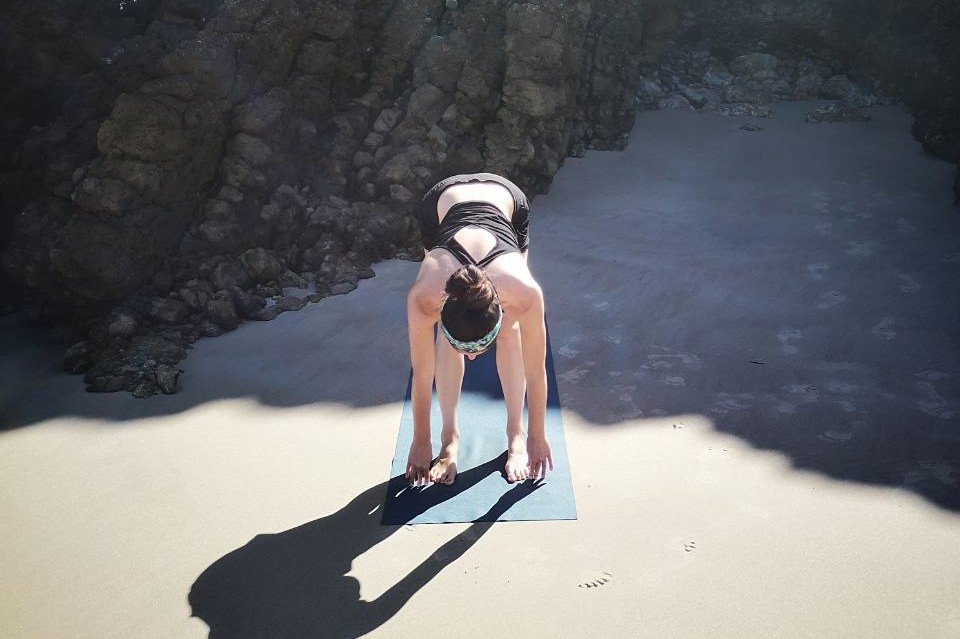
In yoga, it is common practice to breathe through the nose. However, in case of overheating, exhaling through the mouth from time to time can help balance Pitta and release tensions.
Recommended physical practices:
-
Yin yoga
-
Gentle Hatha yoga
Some families of asanas particularly suited to Pitta:
-
Gentle backbends (release the Pitta heat accumulated in the abdominal region): cobra pose, bow pose, fish pose…
-
Side stretches (release Pitta heat in the torso): triangle pose, side angle pose…
-
Twists (stimulate the digestive organs): revolved triangle pose, reclining or seated half twist…
-
Forward bends (soothing and cooling effect): forward fold pose, half forward fold…
-
Hip openers (promote the release of physical and emotional tension): butterfly pose, pigeon pose, tree pose…
Cooling pranayamas:
-
Chandra Bhedana (moon breath): close the right nostril, inhale through the left nostril, then close the left nostril and exhale through the right. Repeat 5 to 10 times.
-
Shitali / Shitkari pranayama: cooling breath through the tongue or the teeth
Kriya:
Nadi Shodhana: breath purification to balance lunar and solar energies
Meditations:
-
Yoga Nidra (sleep yoga)
-
Cooling visualizations: imagine bathing in a cool river, your head under a waterfall, surrounded by soothing nature
-
Soothing affirmations: mentally repeat “I am at peace”, “my mind is serene”
More than performance or the pursuit of intensity, keep in mind that the goal of summer practice is to support the nervous system and preserve energy.
I hope these tips will make you want to experience summer differently. But above all, don’t turn this article into a new to-do list to execute (just like Pitta! ;). Take what speaks to you, what seems simple and natural to put in place.
Don’t forget: summer is the season when the sun’s influence reaches its peak. It invites us to shine without burning ourselves out: with gentleness, with coolness, and with wisdom.
Each person experiences summer differently depending on their constitution, their health and their lifestyle. If you would like to go further and benefit from guidance to discover your prakriti and receive personalized recommendations on diet, lifestyle or yoga, don’t hesitate to contact me. I would be delighted to guide you🌞